
Blog
Interacting with Law Enforcement: Tips for the Deaf & Hard of Hearing
Encounters with the police can bring potential anxiety over communication. Read this article to learn some practical tips!

Molly Glass


Imagine you are on your way to a family reunion and excited to see your cousins, aunts, and uncles. It’s a good day until you glance at the rearview mirror and see red and blue lights behind you. This experience is one that many deaf and hard of hearing people will encounter at least once in their lives. Read on to learn more about safe practices and effective communication strategies.
Pullover Safely
When a police car behind you signals its lights, pull over at the first safe opportunity. If you are on a busy highway, exit or find an emergency lane only when it’s safe. Pull into the first parking lot available if you're in an industrial area with shops and businesses. Pulling over on a busy road poses risks to the safety of both parties.
Have documents ready
Once parked, the officer will likely run your plates. While waiting for the officer to approach your window, retrieve your registration and driver's license. Place them on the dashboard and only give them to the officer once requested.
Prioritize Safety
Once you have your documents ready, you could place both hands on the steering wheel to minimize any appearance of threat. Once the officer approaches and begins talking at your window, you can make the universal “can’t hear” gesture or sign. Signing before informing the officer of your deafness can be misinterpreted as sudden or threatening in some unfortunate cases.
Use Communication Tools
While you can ask the officer to write notes back and forth, there are other useful methods to communicate effectively to help add clarity.
Deaf Visor Cards
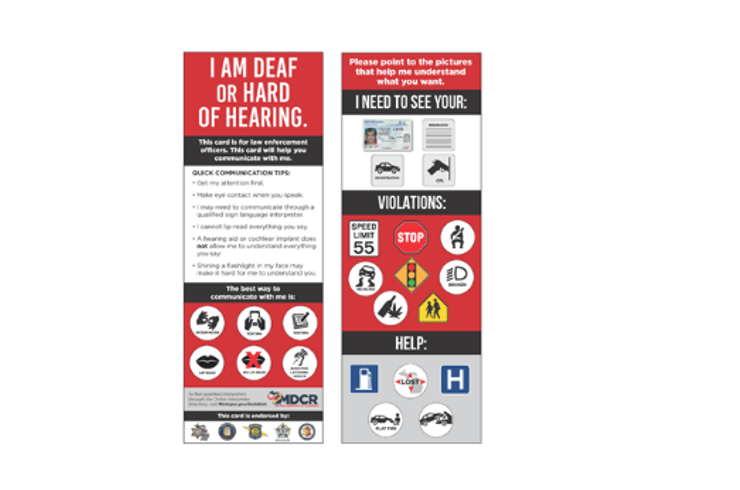
The image shows both sides of a Deaf/HOH visor card. Image credit: Michigan DODDBHH
Many states offer free visor cards for deaf and hard of hearing drivers through local departments. In Michigan, for example, you can download a printable version of the card; others will mail them to you. Your local vocational rehabilitation center may also have these available. These cards clip onto your window visor and inform officers of your hearing status. They also include symbols for common messages like speeding or needing assistance, as well as options for your preferred communication method: texting, writing, ASL, or assistive devices.
Rylo Live Transcribe
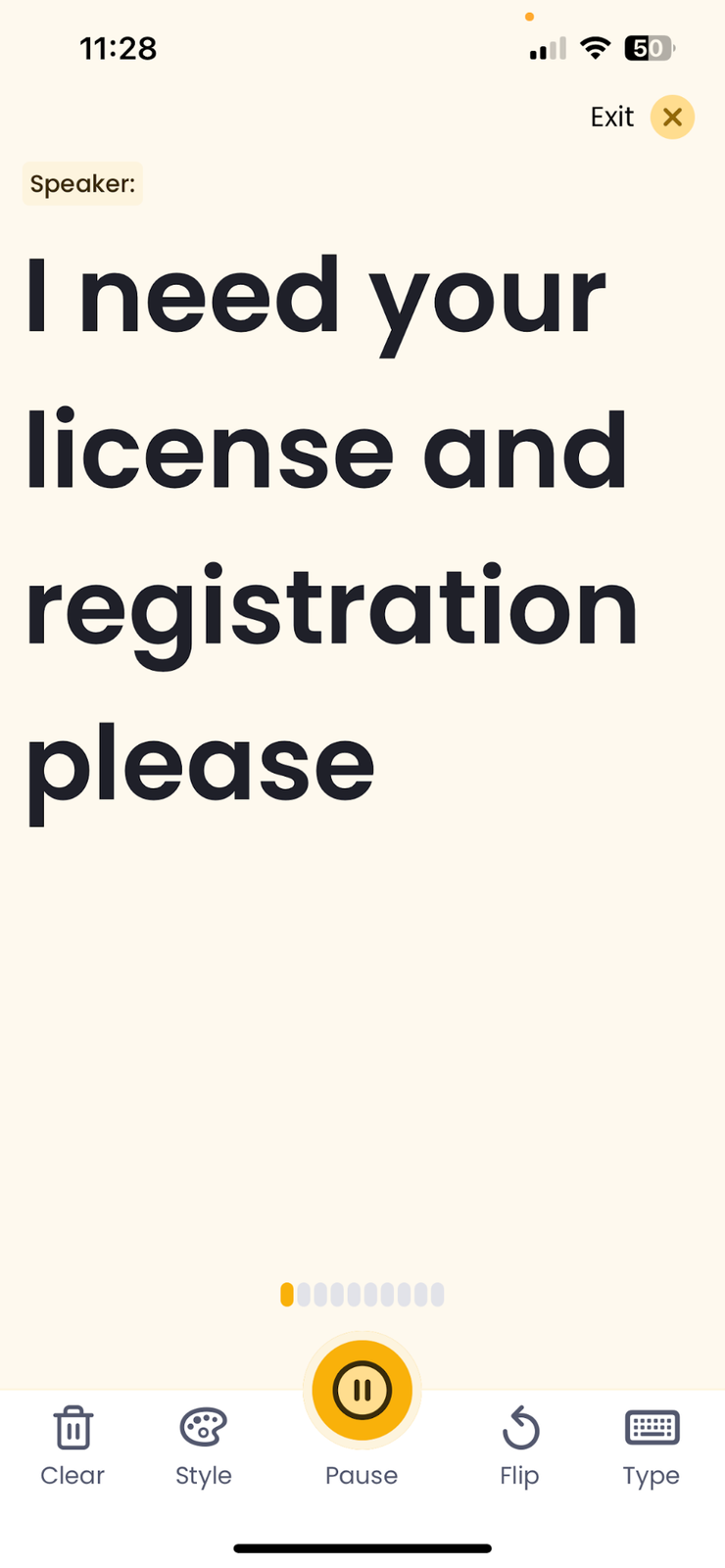
The image is a screenshot of the Rylo Live Transcribe. The text says, “I need your license and registration, please.”
The Rylo app provides a free live transcribe feature with unlimited minutes. It also allows for easy offline transcription with customizable settings such as light or dark mode and font size. All transcriptions are saved for later review.
Pullover Pal Organizer
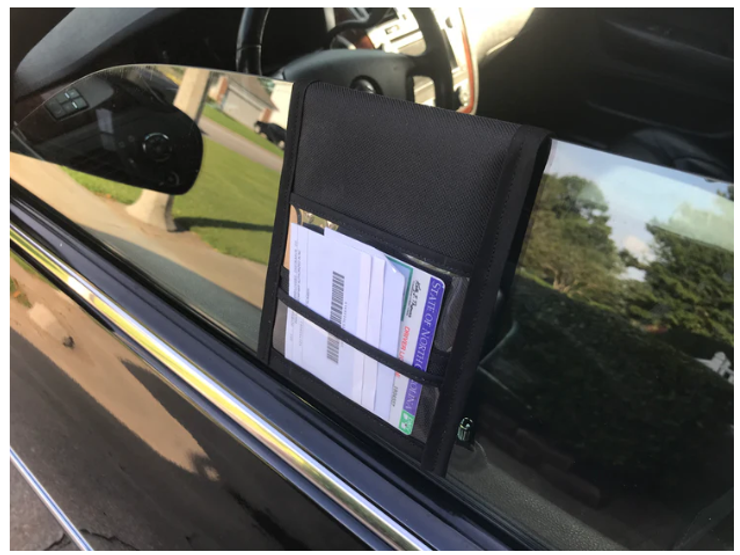
The image is a Pullover Pal organizer hung from the driver’s side window. Image credit: Pullover Pal
Another useful tool available for the deaf and hard of hearing is the Pullover Pal organizer. It’s a cloth bag that holds your registration and driver’s license, with an embedded visor card that hangs from your window to notify officers of your hearing status.
The organizer can be purchased from the Pullover Pal website or on Amazon.com.
Your Legal Rights
According to the National Association of the Deaf, law enforcement officials must ensure effective and clear communication with deaf and hard of hearing citizens. This can mean writing notes, using voice-to-text apps like Rylo’s Live Transcribe, or, in complex scenarios like interviews, using CART services or ASL interpreters.
If you are arrested or interrogated, you have the right to request an ASL interpreter or CART service. You can also request to be handcuffed in front of your body instead of behind your back to facilitate communication that you are comfortable with, such as writing notes or using sign language.
Conclusion
Interactions with law enforcement can cause anxiety for many deaf and hard of hearing individuals. With preparation and the right tools that you’re comfortable using, you can approach these encounters with confidence.
Molly Glass Molly, a Deaf mom of two CODAs, lives with her hearing partner of almost 14 years in the scenic Blue Ridge mountains of Virginia. Profoundly Deaf since 18 months old, she enjoys writing about the lived Deaf experiences and advocacy. In her free time she reads, and is very slowly working on authoring her first book.
Read next

Rylo Desktop is here: live captions for every call on your computer
Rylo Desktop brings live captions to Zoom, Meet, Teams, and more on Mac and Windows. Free for people with hearing loss or a speech disability.
October 26, 2026

Rylo partners with NVIDIA to build the future of AI-powered sign language translation
What the NVIDIA collaboration means, and a look inside the research: how we turned sign language video into tokens a language model can read and write.
October 21, 2026

How to Call a Deaf Person on the Phone: The Complete 2026 Guide
Need to call a deaf person on the phone? Learn how 711 relay services, VRS, captioned phones, and apps like Nagish make communication simple in 2026.
June 12, 2026