
From cutting edge research to Real-World conversations
In 2025, Rylo acquired sign.mt, an AI research company working at the intersection of Computer Vision, LLMs, and Sign Language Translation.
Today, Rylo pushes this research further with investment into high-quality, real-time sign language tools that help deaf, hard of hearing, and signing individuals communicate across many situations.
We imagine a world where a signer can walk into a fitness class, a meditation studio, a doctor's office, or a casual meetup and feel confident that information will reach them in their language. Our goal is to turn that from a special accommodation into an everyday expectation.
You should not have to wait for the perfect environment, or the perfect interpreter, to understand and be understood.
Setting a new standard for accessible communication
Our AI-powered sign language technology is designed to support a wide range of situations — from planned events and educational settings, to spontaneous moments in daily life.
-
Media, broadcasting, and streaming
Watch news, shows, and live events in sign - not only with tiny subtitles. Spoken content is turned into signed content so deaf people can follow interviews, sports, and breaking news in a language that feels natural.
-
Public transportation
Stay informed during every trip. Spoken announcements about delays, platform changes, or safety updates become clear signed information, so you never have to guess what was just said over a loudspeaker.
-
Education
Deaf students and hard of hearing learners deserve to learn in a language that matches how they think. Lectures, online courses, and classroom discussions can be supported with sign language output so signing students can follow complex topics more easily and participate more fully.
-
Meetings
Keep up with fast-moving conversations at work or in groups. Our sign language tools help signers follow discussions, understand decisions in real time, and contribute on equal footing with hearing colleagues - no hassle, no lag.
-
Virtual reality
Bring sign language into digital worlds. In VR, signers can interact using handshapes, facial expressions, and body language instead of relying only on text chat or voice, making social spaces, events, and training more inclusive.
-
Museums and cultural experiences
Enjoy exhibits, tours, and performances with richer access. Guided content, descriptions, and talks can be presented in sign so visitors from the Deaf community can connect more deeply with art, history, and culture.
-
Day to day conversations
Make everyday interactions easier. Quick chats at a store, asking for directions, or handling a short task at an office become less stressful when spoken language is supported with signs - even in spontaneous situations.
Try the Sign Language Tools Already Live and Shape The Future
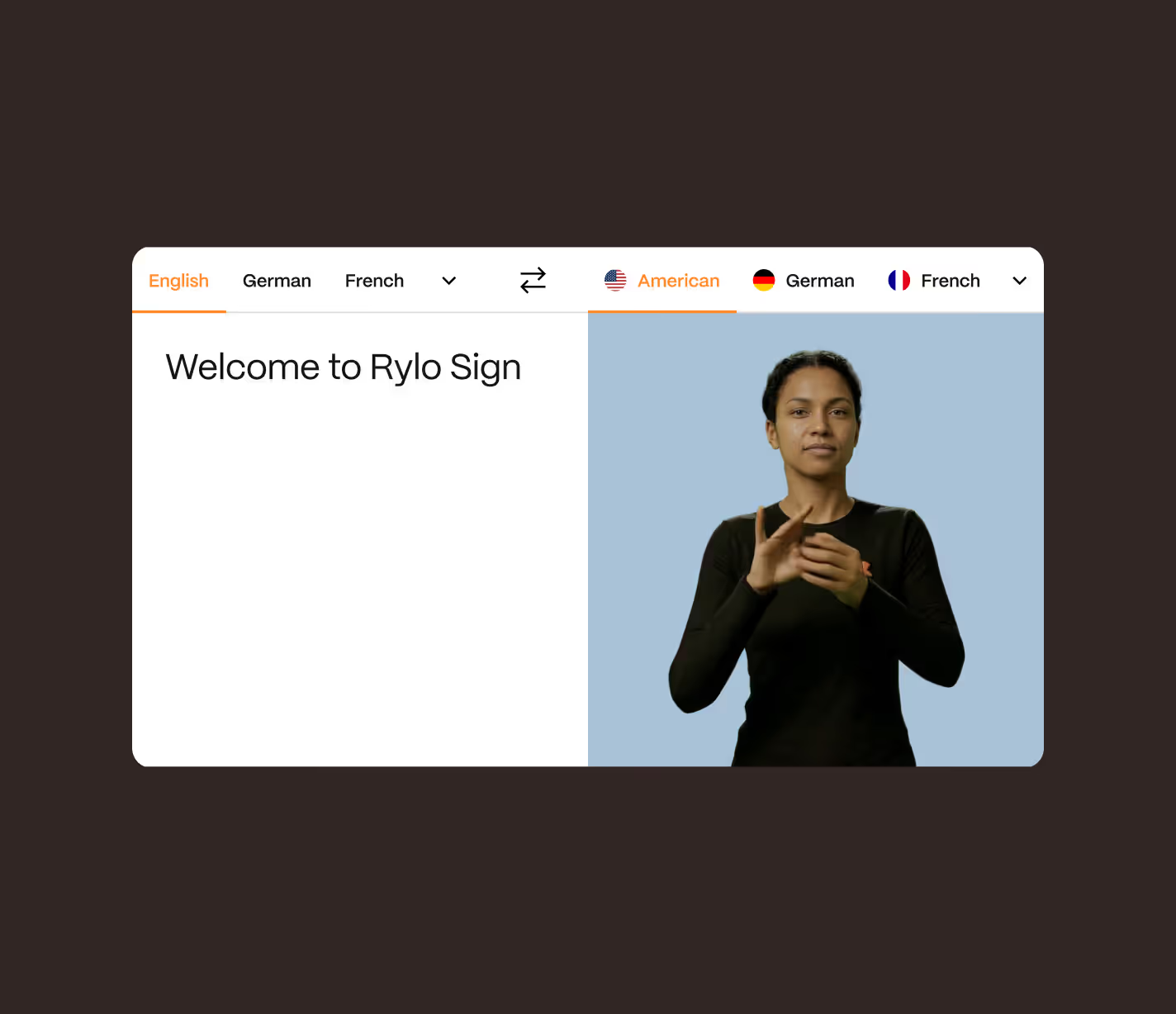
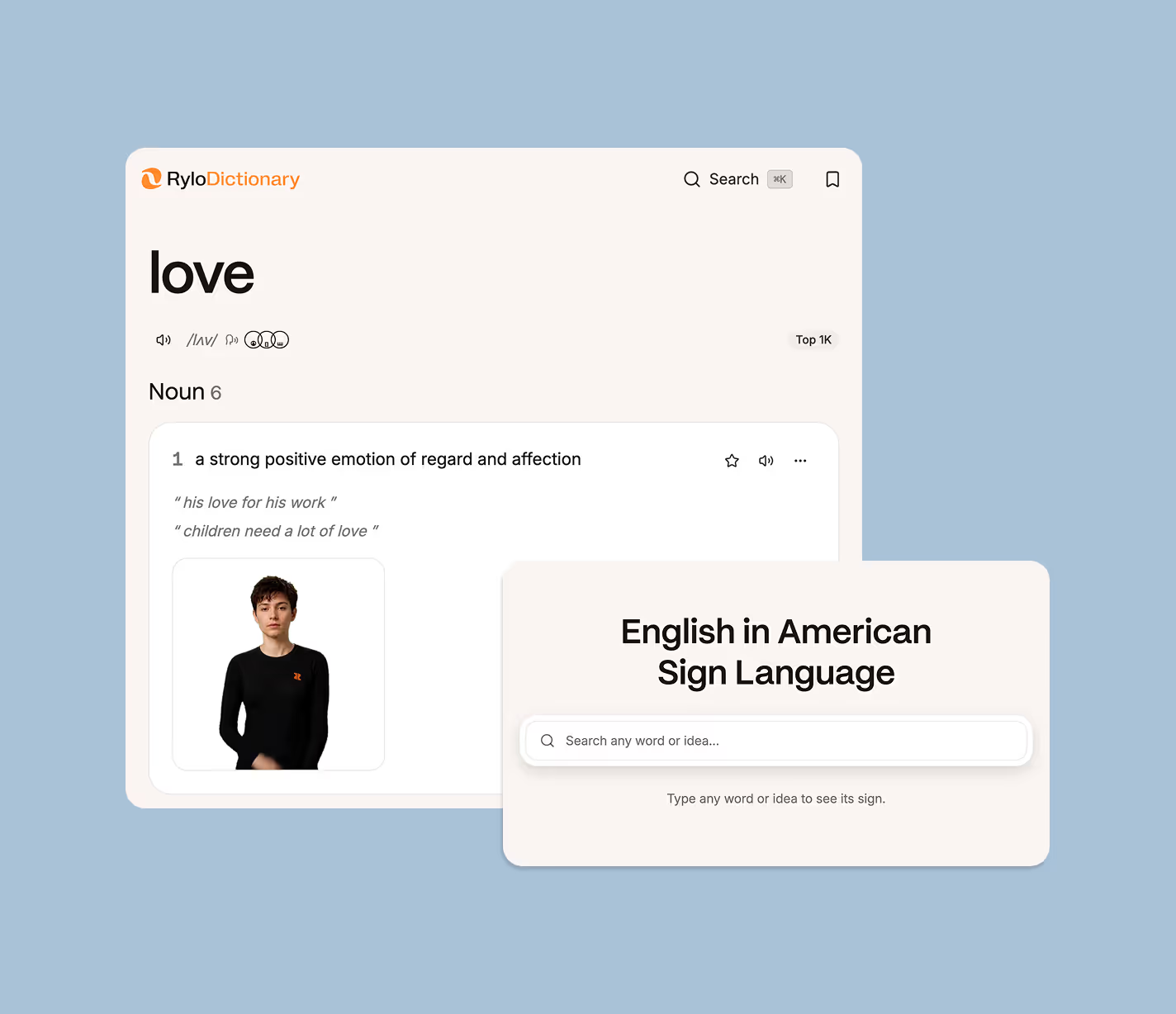
Sign Dictionary
Now in beta: The most accurate ASL dictionary available online
- A living ASL dictionary covering concepts, entities, and everyday terms - grounded in real sign language data from Deaf culture
- Look up ASL signs quickly to learn, teach, or clarify meaning in context
- Ongoing updates and corrections, guided by linguists, Deaf experts, and the wider signing community
- Use it as a companion for Sign Translate, for education, or simply for curiosity. Ideal for beginners, learners, deaf students, ASL students, and CODAs alike
A modular approach to sign language AI
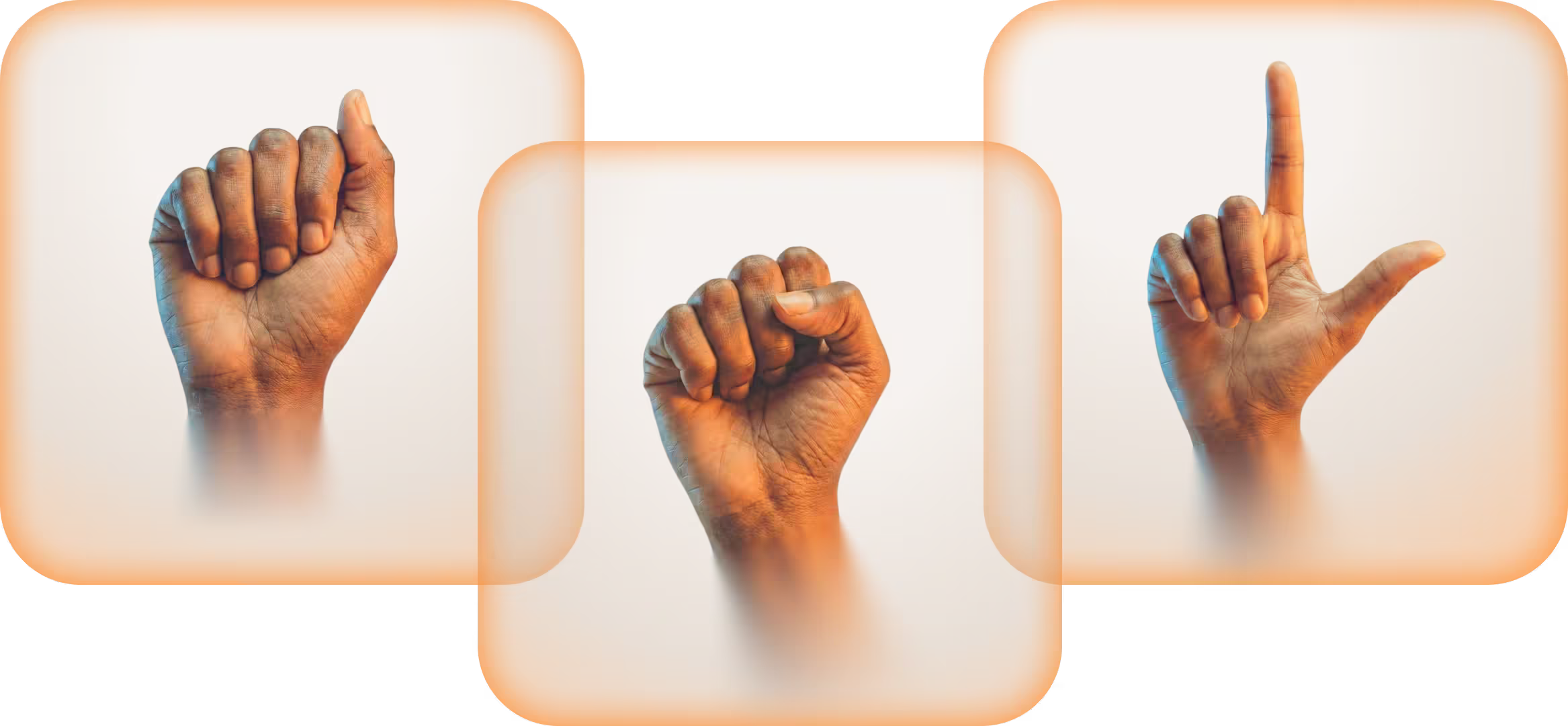
Sign language is not "just another language." It has rich grammar, structure, facial expressions, spatial features, and handshapes that spoken language tools simply cannot handle. To respect that complexity, our technology separates the visual understanding of hand movements, facial expressions, and more from the language translation itself. This modular pipeline is grounded in research and designed to be more robust, flexible, and accurate over time.
Meet the team behind the research
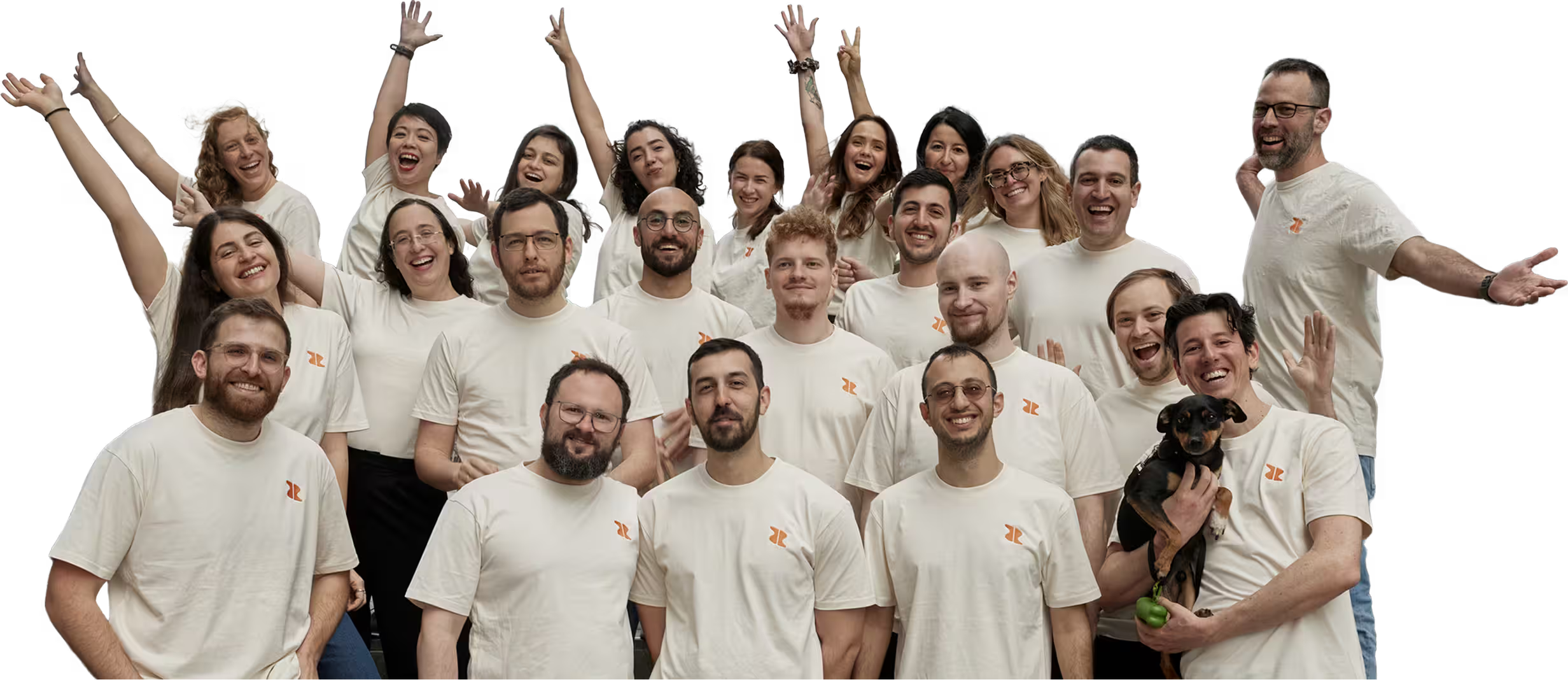
Our sign language work brings together Deaf and hearing researchers, engineers, linguists, and product designers. The team is small, focused, and deeply committed to building with the Deaf community, not only for it.

Dr. Amit Moryossef
Head of Research
Amit is a leading researcher in real-time multilingual sign language processing. His PhD established the foundation for our modular translation pipeline and SignWriting-based machine translation. He continues to publish peer-reviewed research and leads the technical direction of our sign language systems.

Sarah Bekrar
Annotation Lead
Sarah is a linguist, former interpreter, and trilingual annotation specialist (French, English, Japanese). At Rylo, she leads the annotation team and quality assurance for sign language AI. With 4+ years in AI annotation and classification, she brings technical precision and cultural fluency.

Shaltiel Shmidman
AI Researcher
Shaltiel has spent the past decade at the forefront of applying deep learning to low-resource languages. He has hands-on experience building and training LLMs across the full stack, leading projects that scale across hundreds of GPUs, and applies this expertise to developing our sign language systems.

Ziv Lazarov
Machine Learning Engineer
Ziv is a Machine Learning Engineer, building the infrastructure that powers our sign language technology stack. His work spans ML inference services, training and data pipelines and cloud infrastructure - bridging the gap between research models and production systems.

Ariel Aharonson
Full Stack Engineer
Ariel is a full stack engineer who builds the tools and internal platforms that the research team relies on day to day. He works closely with researchers and engineers to understand their needs and deliver functional, reliable software that keeps the team moving forward.
FAQs
-
What are sign language tools?
Sign language tools are software applications and AI-powered systems that help people communicate using signed languages such as ASL (American Sign Language) or British Sign Language. They can translate spoken or written content into sign language, help learners look up ASL signs, or support real-time conversations between signers and hearing people.
-
Who can benefit from AI-powered sign language tools?
These tools are designed for deaf people, hard of hearing individuals, signers, ASL students, deaf students, learners, and beginners who are learning ASL or another signed language. They are also useful for hearing friends, family members, CODAs, and professionals who work with the Deaf community.
-
Do Rylo's sign language tools support American Sign Language (ASL)?
Yes. Rylo's tools support ASL as a primary language. The Sign Dictionary is currently one of the largest and most accurate ASL dictionaries available, and Sign Translate supports multilingual real-time translation.
-
Are Rylo’s sign language tools suitable for beginners learning ASL?
Absolutely. The Sign Dictionary is designed to be accessible to beginners and experienced learners alike. You can look up individual ASL signs, browse by concept, or use it alongside Sign Translate to deepen your understanding of ASL signs and Deaf culture.
-
How is this different from a basic ASL dictionary or flashcard app?
Most ASL dictionaries and flash card tools are static. Rylo's Sign Dictionary is a living resource - continuously updated by linguists, Deaf experts, and the signing community, and covers a far broader range of concepts and entities than a traditional ASL dictionary. Combined with Sign Translate, it becomes a comprehensive sign language resource rather than just a reference tool.
-
Is Rylo's sign language technology open source?
Sign Translate is open source and built with the Deaf community. We believe the best sign language tools are developed transparently, with ongoing input from deaf people, linguists, and researchers.
-
What makes Rylo's approach to sign language AI different?
Most AI language tools treat sign language as an afterthought. Rylo's modular pipeline separates the visual recognition from the translation layer, making it more accurate and adaptable across different signed languages. Our team includes Deaf researchers, linguists, and community members, not just engineers, which means the technology reflects how sign language is actually used.
-
Are these sign language tools free to use?
Sign Translate and the Sign Dictionary are free and maintained by the community.
-
How can I get involved or share feedback?
We welcome input from deaf people, hard of hearing individuals, ASL students, learners, researchers, and anyone passionate about accessible communication.